
Where We Hunt in Kansas
King Whitetails hunts across a network of private Kansas properties selected for habitat, wildlife quality, and the opportunity to manage hunting pressure. Our whitetail and turkey ground covers multiple Kansas hunting units, while our waterfowl and predator operations use additional private ground suited to those species.
The properties are not one continuous ranch. They are multiple parcels spread across the areas we hunt, giving our guides flexibility when weather, wind, wildlife movement, or hunting pressure changes. That variety is an important part of how we approach each hunt.
Interactive Hunting Map
Deer unit boundaries from KDWP regulation K.A.R. 115-4-6, turkey units from K.A.R. 115-25-5. Unit outlines are for orientation only. No property locations or boundaries are shown. Predator hunting covers about 10,000 acres on separate private ground, details on request.
10,000 Acres for Kansas Whitetails and Turkey
King Whitetails manages access to approximately 10,000 acres for whitetail deer and spring turkey hunting. The ground is spread across Kansas Deer Units 4, 7, 8, and 14 for whitetails, and Units 2 and 3 for spring turkey.
Parcels can be as large as 1,200 acres, with multiple smaller properties across the different units. This gives the guides several areas to work with rather than putting every hunter on the same piece of ground.
Whitetail Deer Units 4, 7, 8, and 14
Unit 4
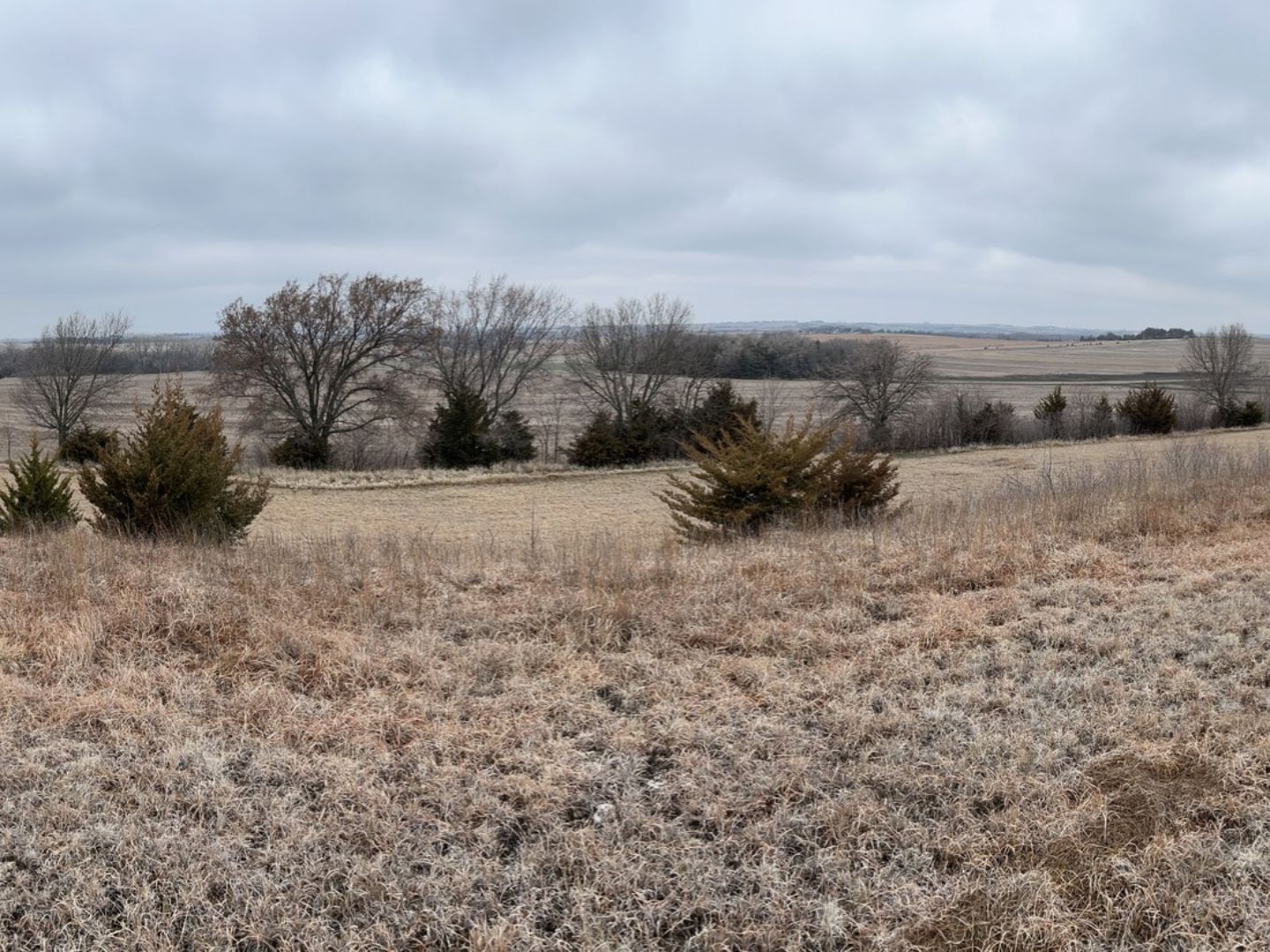
Unit 4 is in central Kansas and is made up primarily of private ground, rolling grasslands, scattered creek drainages, and moderate water. The mix gives deer cover, travel routes and feeding areas that guides can evaluate when choosing stand locations.
Unit 7
Unit 7 is in north-central Kansas and includes prairie and grassland habitat that ranges from flat to slightly rolling. Creek bottoms, grassland draws, and reservoir edges add structure to an otherwise open landscape.
Unit 8
Unit 8 is in central Kansas, with flat to rolling prairie and access to the Republican River Valley. The area is known within the operation for trophy whitetail genetics, and the combination of river influence, agricultural ground, and prairie habitat creates different opportunities for mature bucks.
Unit 14
Located in south-central Kansas, Unit 14 features a combination of agricultural fields, native grasslands, creek bottoms, and wooded cover that provides suitable habitat for whitetail deer. Abundant food sources and dense bedding areas create opportunities to hunt mature bucks along travel corridors between feeding and bedding areas. Success depends on careful scouting, strategic access, and managing hunting pressure.
Turkey Units 2 and 3
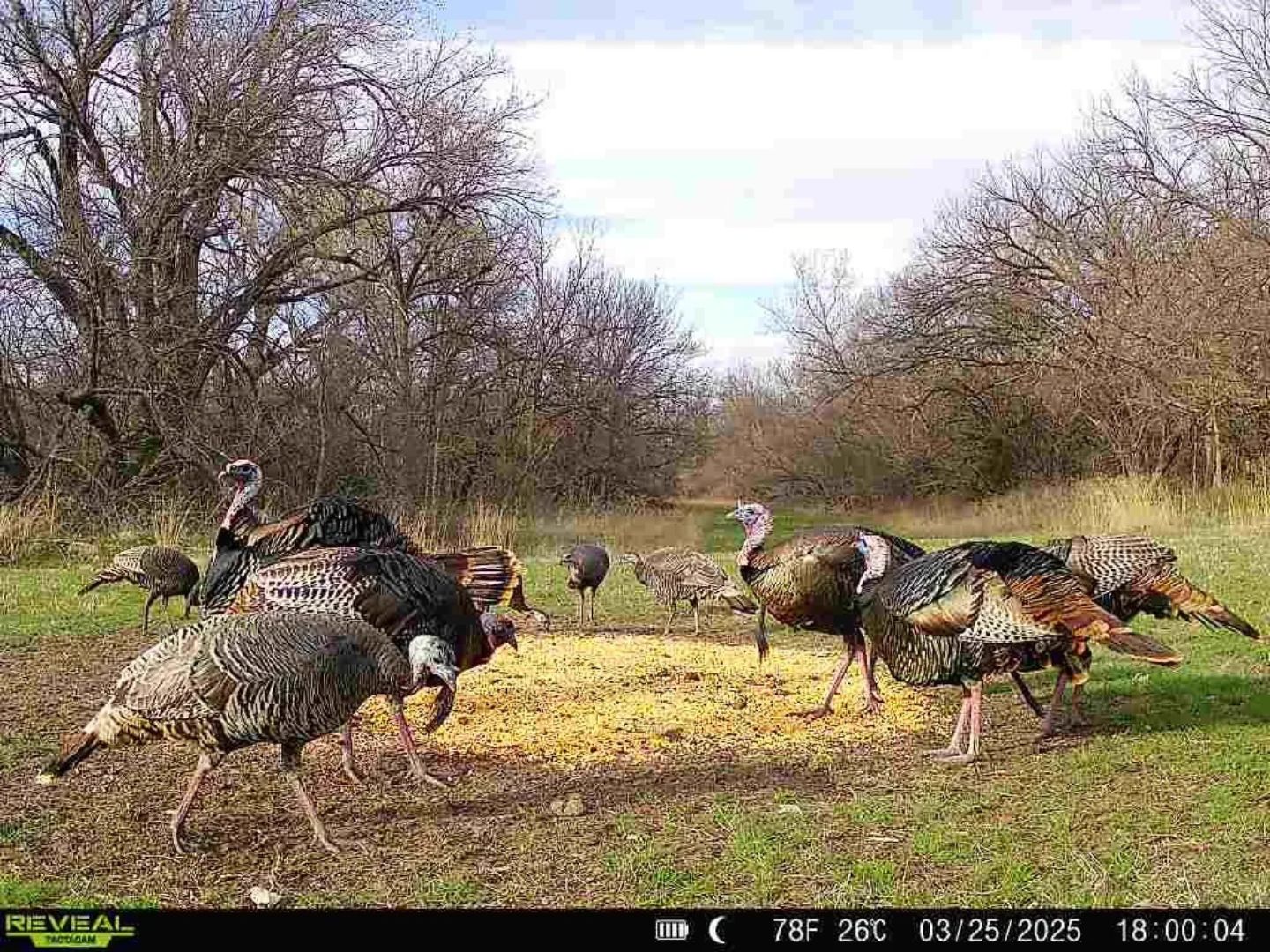
Our spring turkey operation covers 10,000 acres in Kansas Turkey Units 2 and 3. Unit 2 is in north-central Kansas and provides Rio Grande habitat that includes river-bottom timber, rolling hills, and open grasslands. Unit 3 is in northeastern Kansas and includes hardwood timber, creek bottoms, and agricultural edges where Easterns, Rios, and hybrids occur.
Having access to both units gives the guides different habitat types to work with during the spring season. Before hunters arrive, the team scouts roosting areas, feeding patterns, and travel routes and prepares the farms for the upcoming hunts.
Private Ground With Exclusive Access
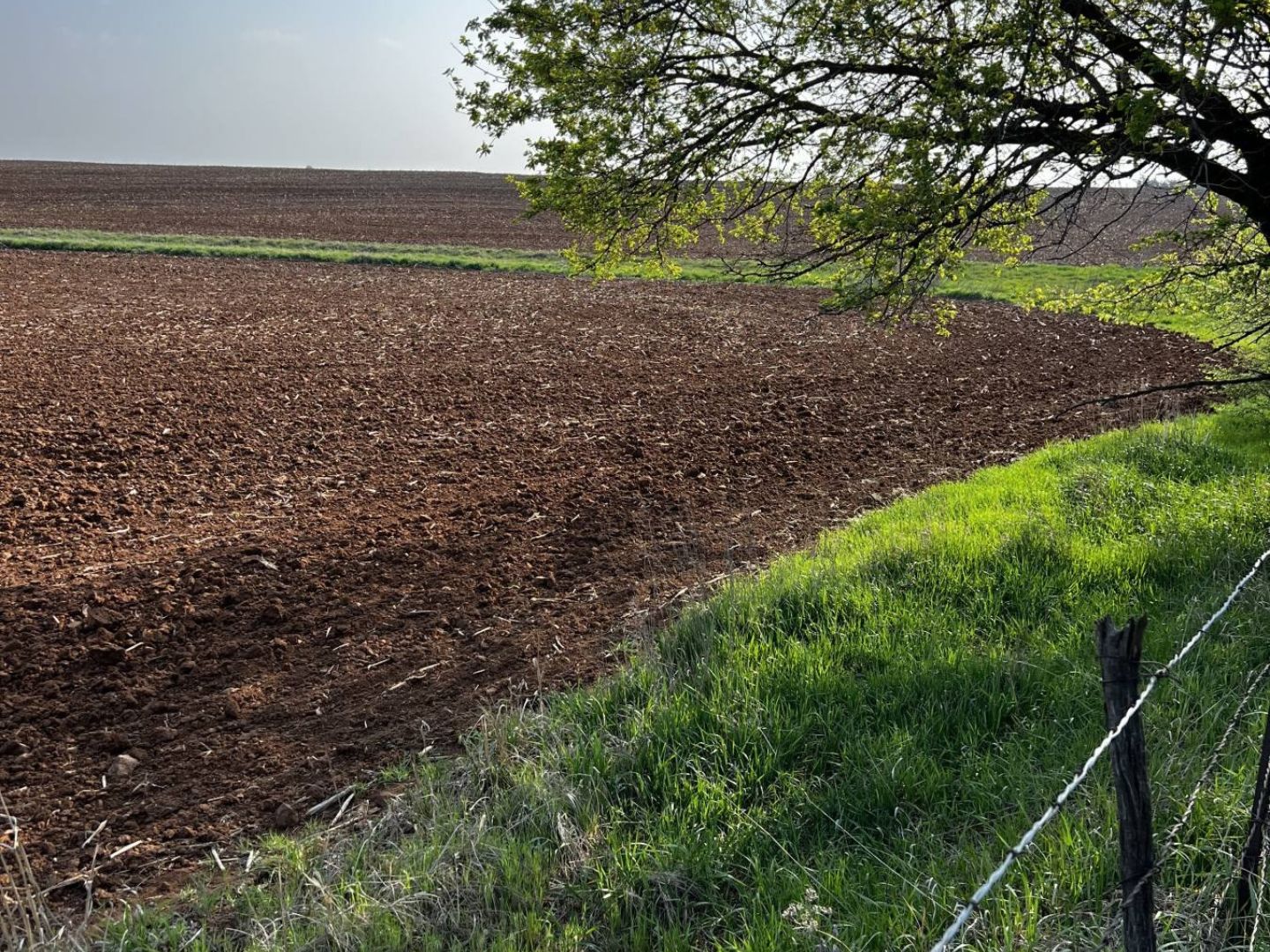
King Whitetails leases private ground with 100% exclusivity. That means the hunting properties are managed specifically for the hunters booked with King Whitetails rather than being open to general public hunting access.
Our eastern properties tend to feature rolling hills, open pastures, and cedar thickets. Western properties are generally flatter and include river bottoms, farmland, and CRP, with more consistent wind. The differences between properties give the guides options when conditions change.
How We Manage the Ground
The goal is not simply to have acreage. The ground is prepared and managed so guides can make informed decisions about where hunters should spend their time.
- Approximately 100 ladder stands and 30 box blinds across the deer and turkey operation.
- Hang-on stands for archery hunts, and brush-in ground blinds when needed.
- Food plots, mostly clover, maintained to provide additional forage.
- Trails groomed to and from stand locations.
- Shooting lanes trimmed annually.
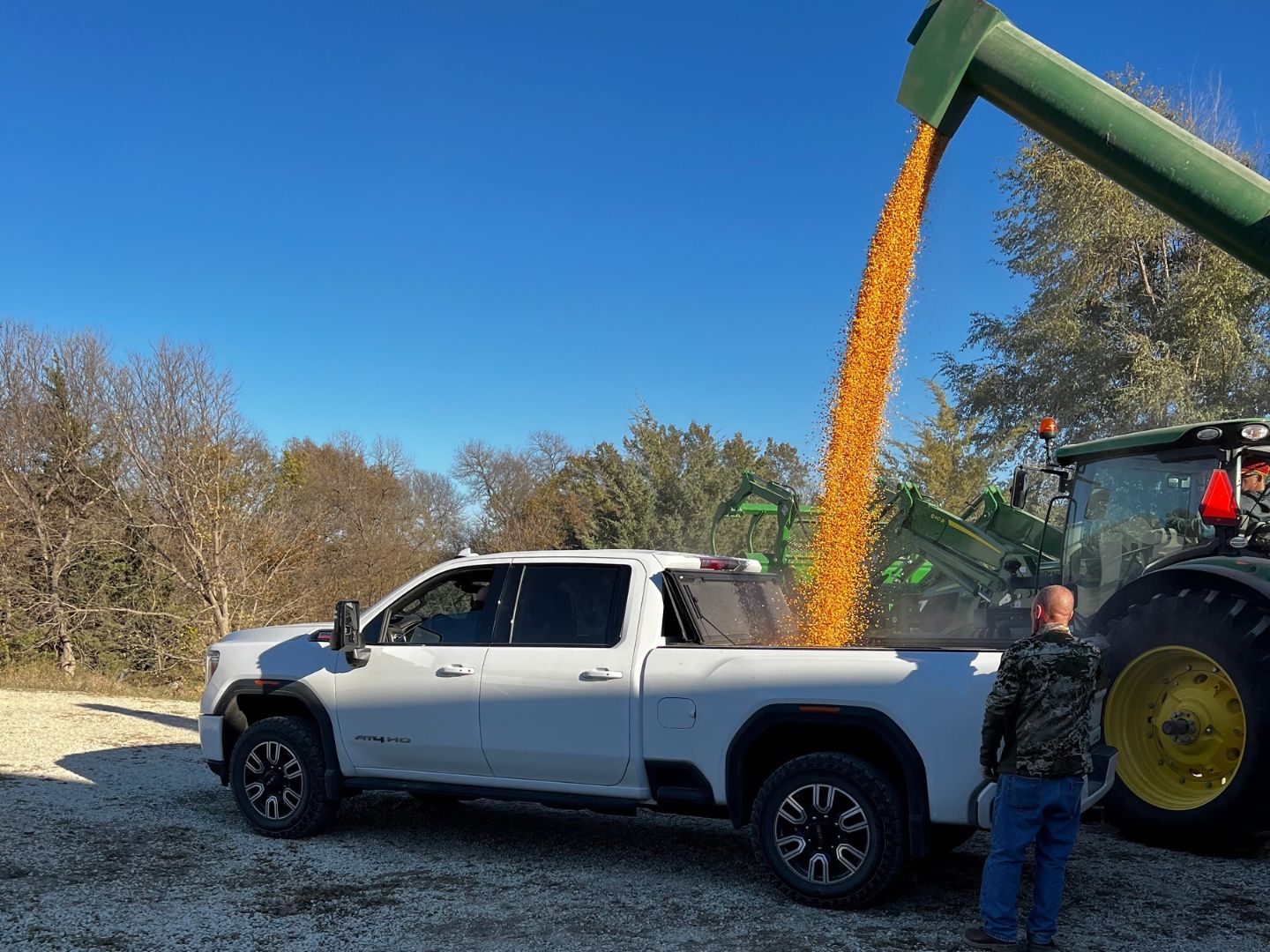
- All farms pre-scouted and baited before hunters arrive.
- Approximately 50 cell cameras from Tactacam and Spartan plus about 25 conventional cameras from Browning and Spartan.
Our Feeding Program
At King Whitetails, we believe a successful wildlife management program starts with understanding the land, its resources, and the needs of the whitetail deer and wild turkeys that call it home. Our Kansas feeding program is built around a variety of feeding strategies, seasonal food sources, and water availability to help support wildlife across our properties throughout the year.
100
Feeding locations across our farms
200,000 lb
Feed delivered annually
4
Primary crops: soybeans, corn, milo and wheat
90%
Of our farms have natural water
Supplemental Feeding
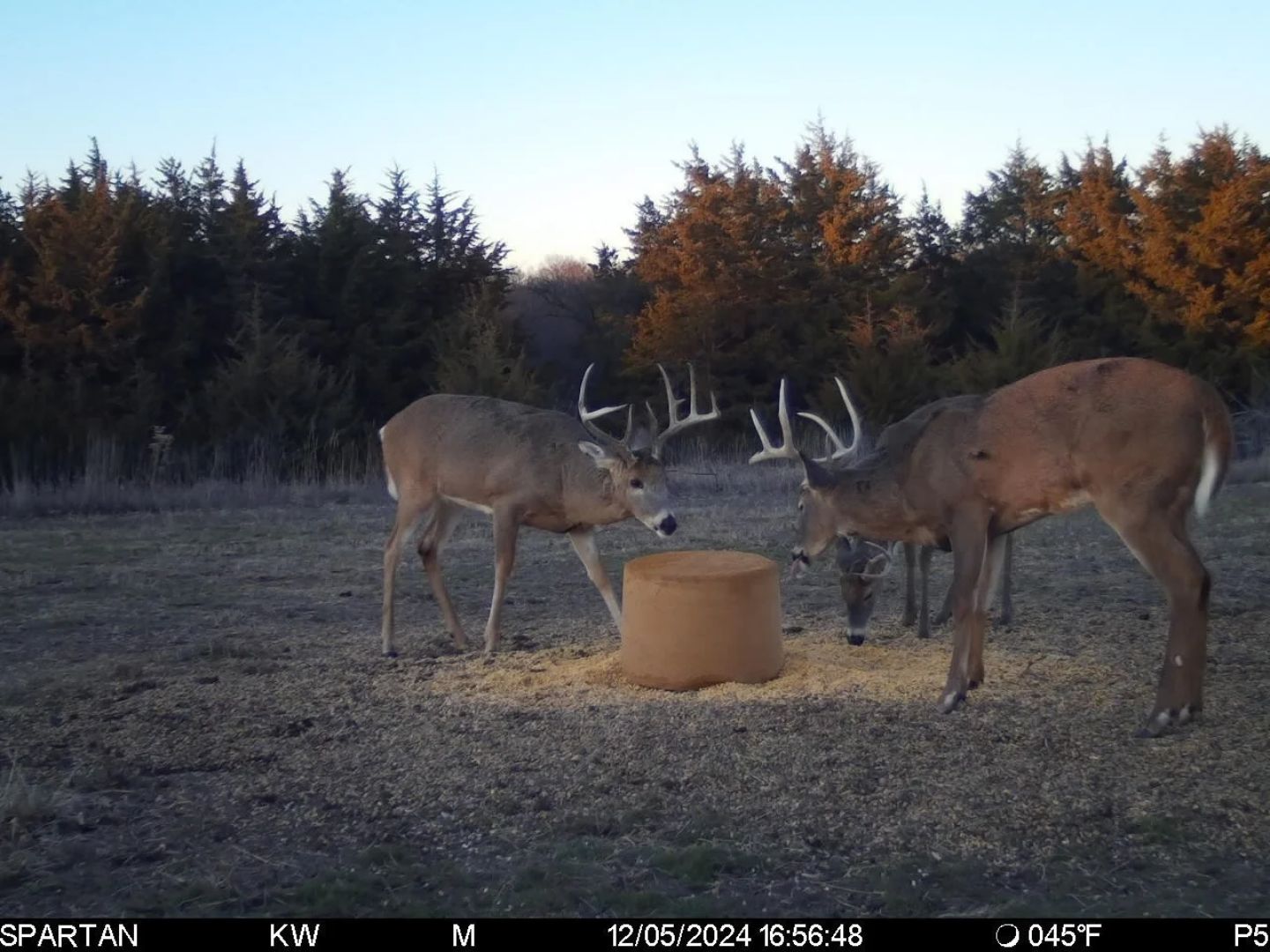
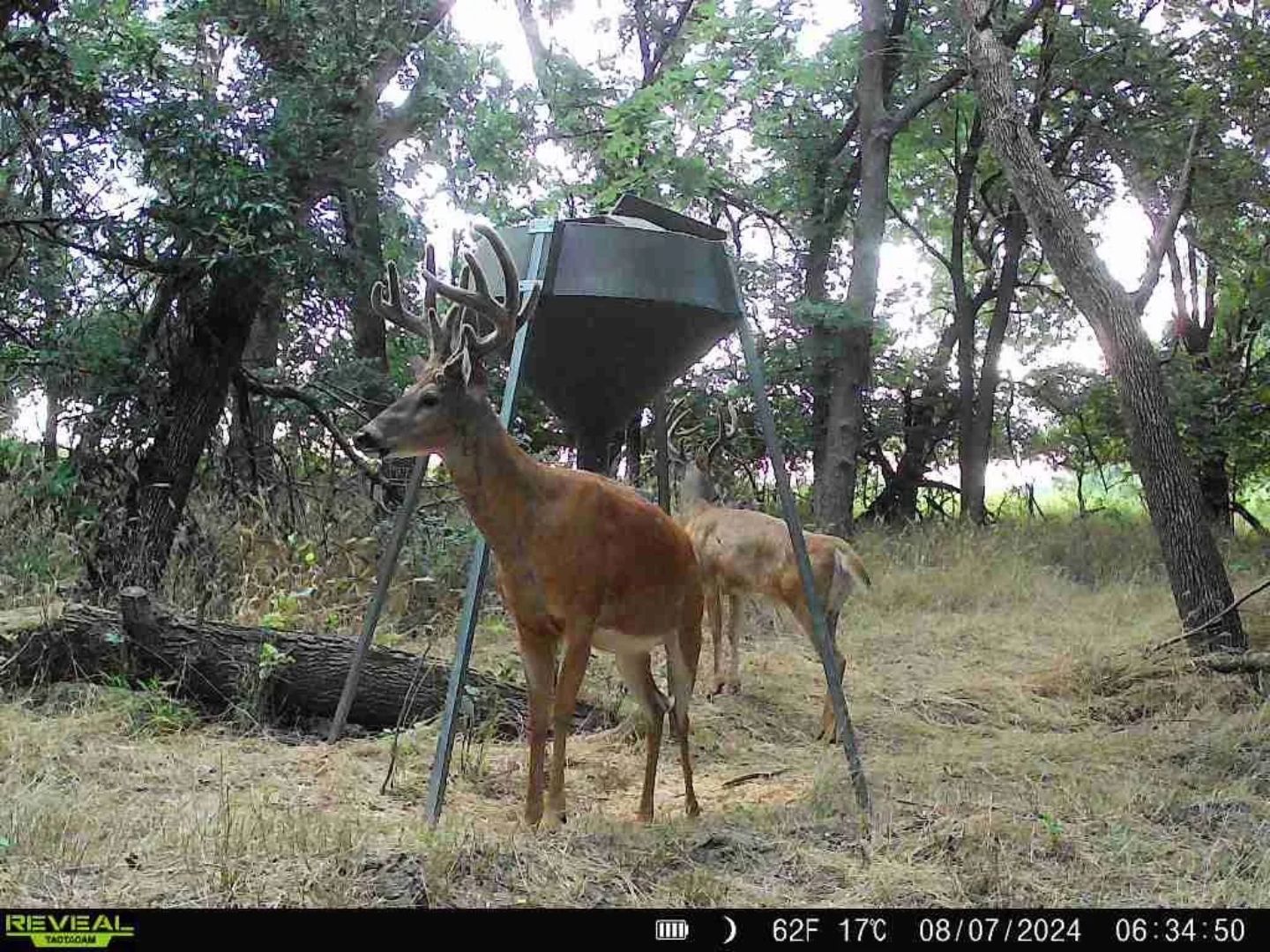
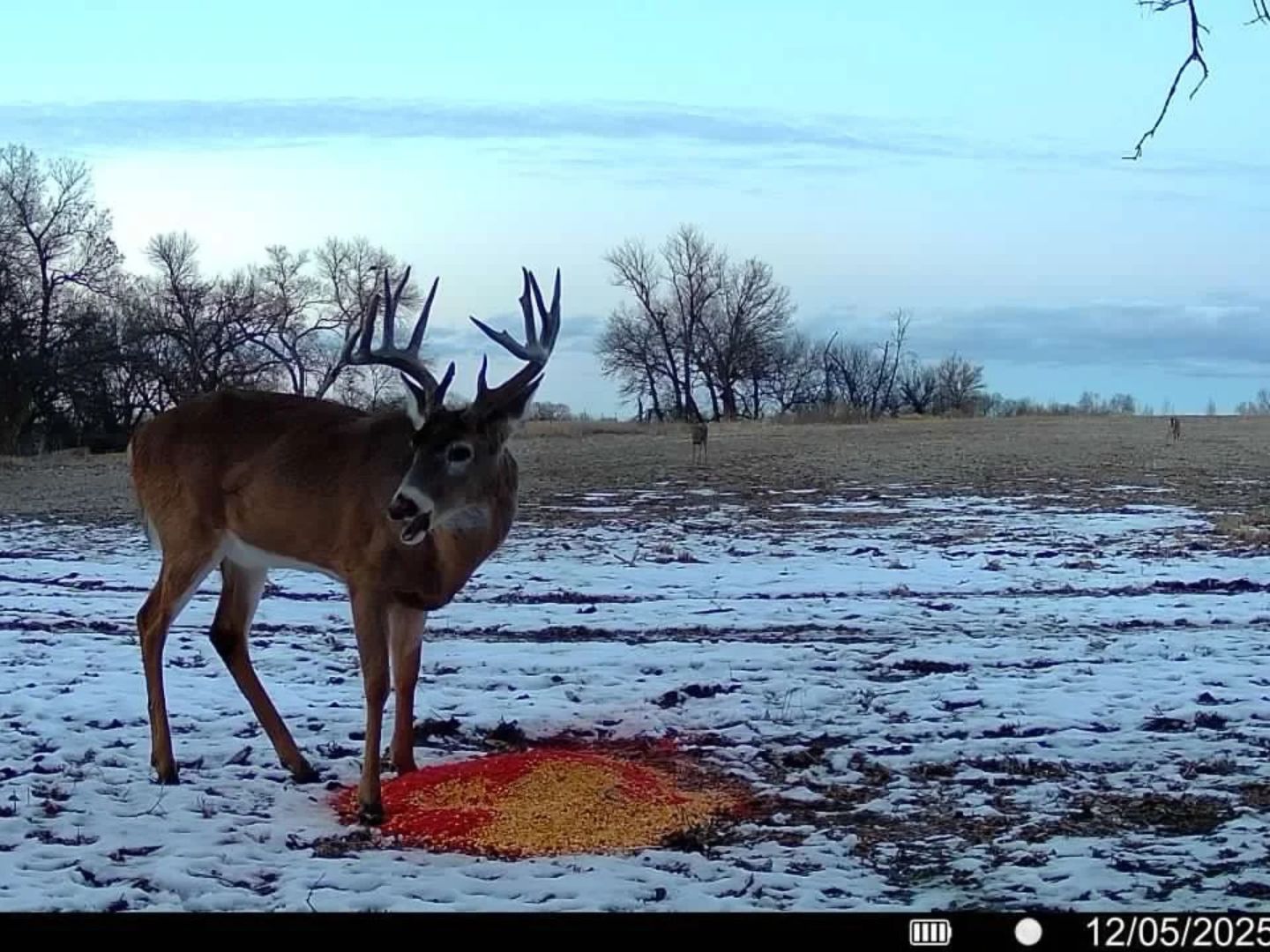
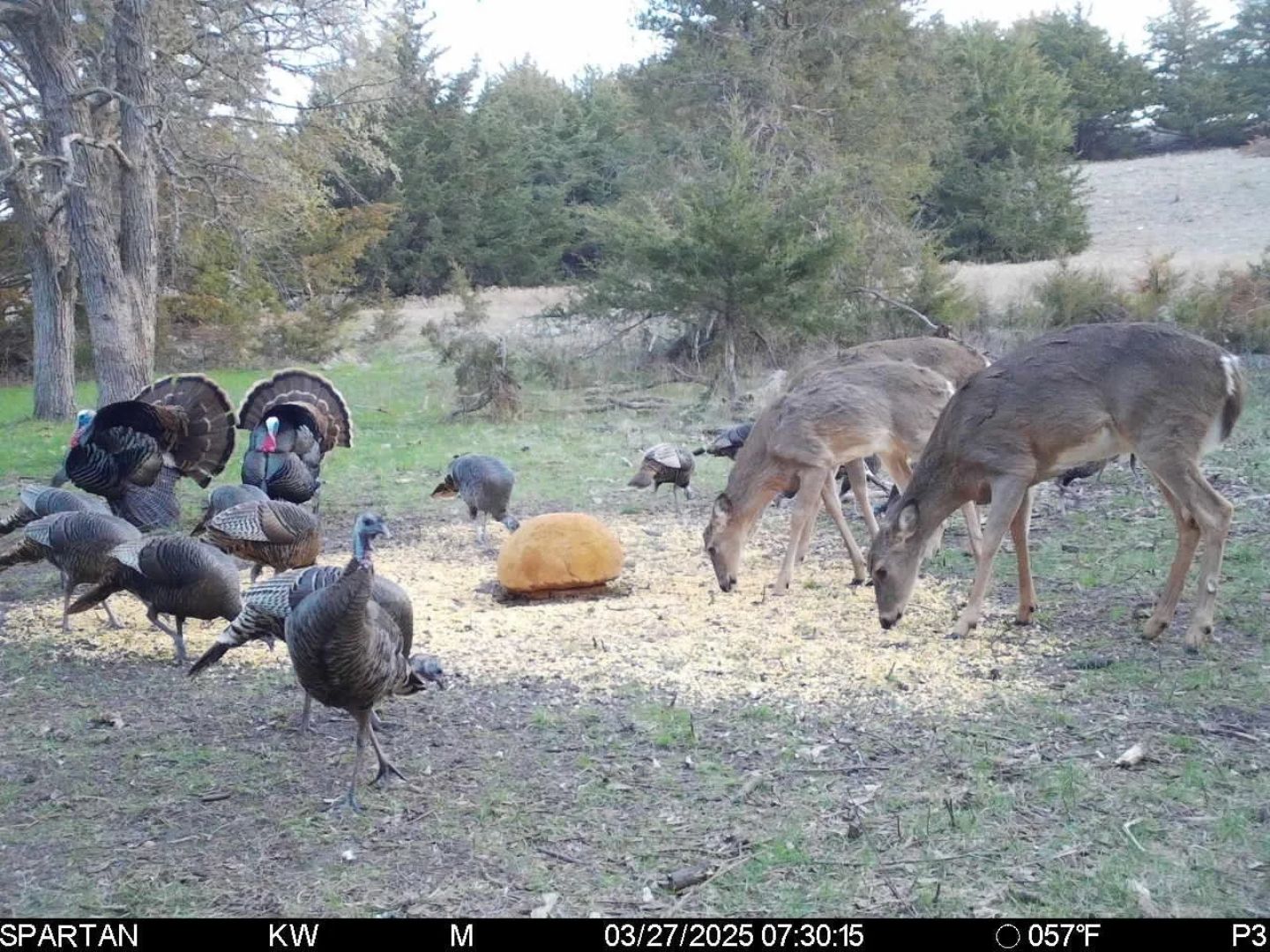
We utilize approximately 100 feeding locations across our farms and deliver roughly 200,000 pounds of feed annually. Our feeding systems include barrel feeders, free-standing feeders, and designated ground-feeding locations. Depending on the time of year and the needs of each property, we incorporate a variety of feed sources, including Grade A irrigated corn, sunflowers, and milo, along with occasional powdered attractants. We also utilize 200-pound protein tubs at select times of the year and in specific situations.
Agricultural Food Sources
Our approach extends beyond supplemental feeding. The majority of our Kansas farms have agricultural crops that provide important natural food sources for wildlife. Soybeans, corn, milo, and wheat are four of the primary crops found throughout the region, offering seasonal food opportunities that complement our supplemental feeding program.
Water
Water is another critical component of our wildlife management strategy. Approximately 90% of our farms have some form of natural water, including rivers, streams, ponds, and drainage areas. On properties where natural water is limited, we utilize water trough delivery systems to help provide an additional water source.
At King Whitetails, no two properties are exactly alike. By combining supplemental feeding, agricultural food sources, and a focus on water availability, we take a property-specific approach to managing our Kansas whitetail and turkey habitat. Every aspect of our program is designed with the land and the wildlife in mind, allowing us to make the most of the resources available across our farms.
Stand Selection Is Based on Current Information
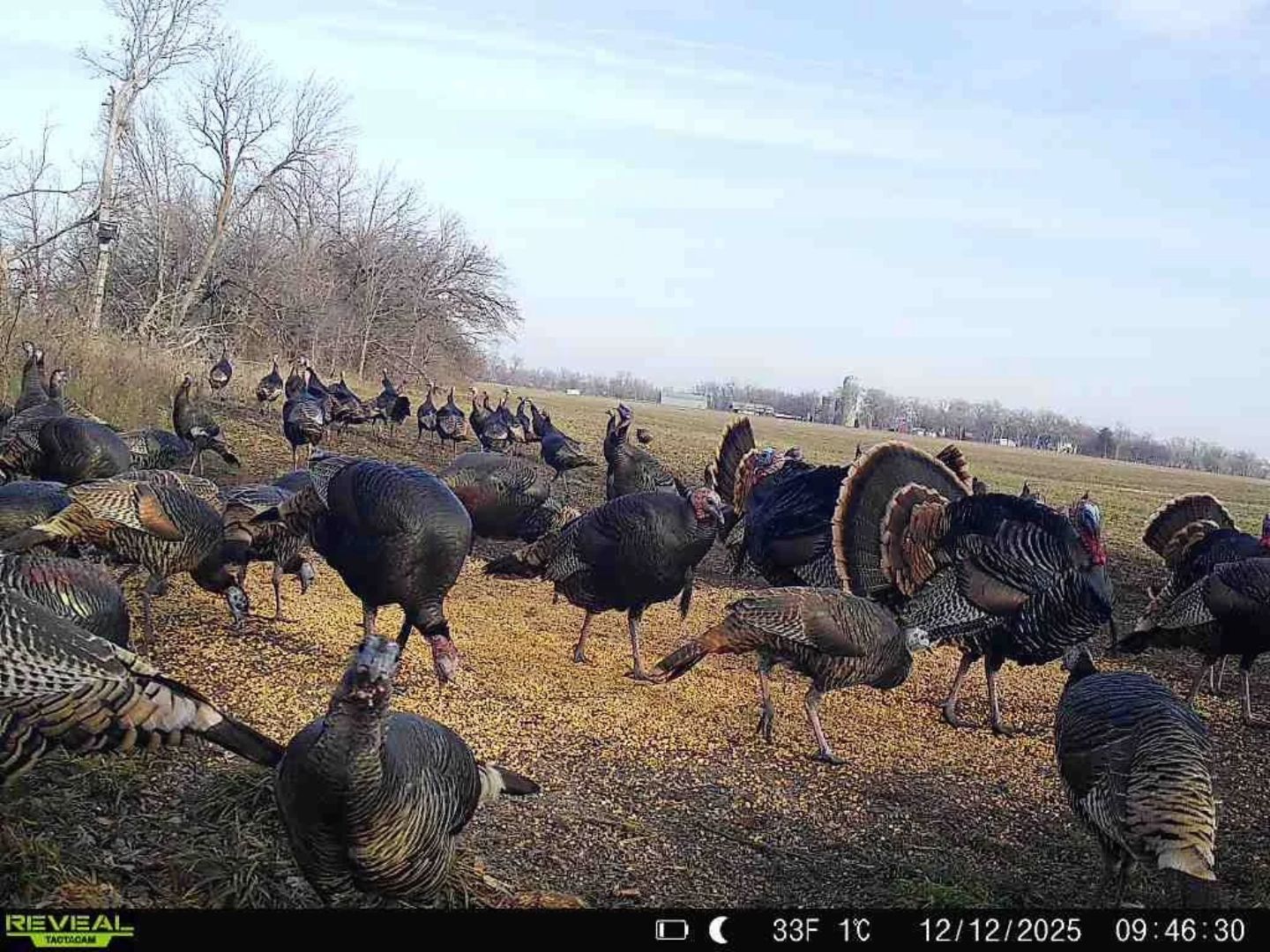
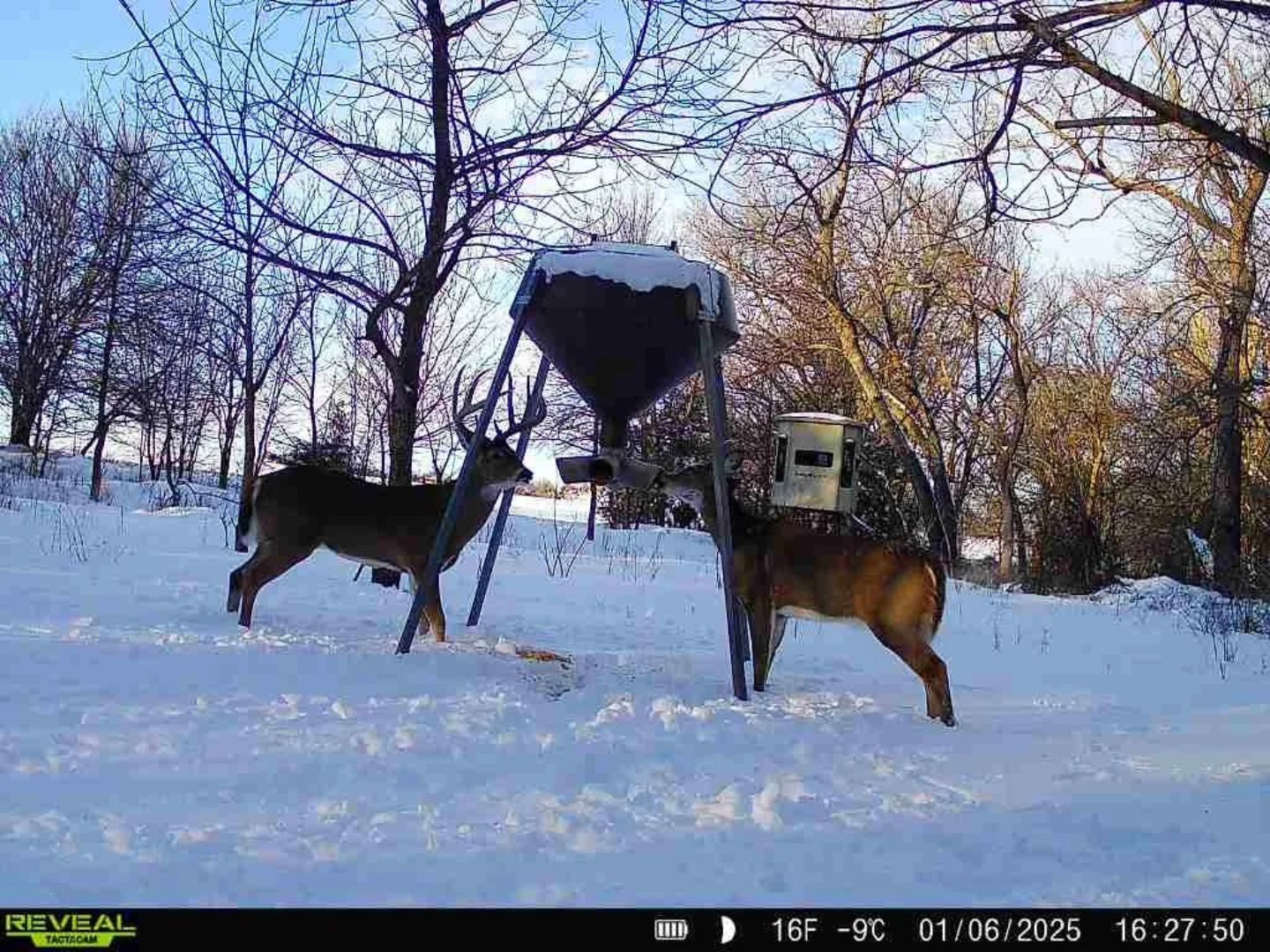
Stand locations are not chosen from a map and left alone all season. Guides use recent scouting information, wind direction, historical data, trail camera activity, and what hunters are seeing in the field. Sometimes a stand makes sense because the data is strong. Other times, the guide's experience and gut feeling point to a better option.
The cameras are used to monitor bait status, general deer movement, the quality of bucks using an area, and whether deer survive into the following season. That information helps the team make decisions as conditions change.
Keeping Hunting Pressure Controlled
The operation limits the number of hunters it takes each year relative to the amount of private ground available. Typical annual numbers are shown below.
20,000 Acres for Kansas Waterfowl
The waterfowl operation has access to approximately 20,000 acres of private ground, including river holes, ponds, and agricultural fields around the Milford Lake area. The variety of water and field habitat gives guides different options for ducks and geese as conditions and bird movement change.
Most waterfowl hunting locations are within about 30 minutes of the lodge, although some properties can be 45 to 60 minutes away. Guides use Tanglefree panel blinds and layout blinds, along with UTV side-by-sides, to get hunters close to the selected setup.
10,000 Acres for Kansas Predator Hunting
King Whitetails also has access to approximately 10,000 acres of private ground for predator hunting. The operation focuses on coyotes and bobcats. Thermal hunting is used for coyotes at night, while bobcat hunting takes place around dusk and dawn.
The predator properties give the guide room to move between areas rather than repeatedly hunting the same stand. Electronic calling is used as part of the setup.
Where You Stay
The King Whitetails Lodge is located on five private acres along the Smoky Hill River. Hunting properties are generally 10 to 35 minutes from the lodge, although some waterfowl properties can be farther away. The lodge provides the base for hunters while the guides select the day's hunting location based on the species, conditions, and current information.
What Hunters Are Saying


Hunt Kansas With King Whitetails
The location is only part of the equation. What matters is having enough ground, knowing how the properties hunt, and giving guides the flexibility to move when conditions change. From the whitetail units of central and north-central Kansas to the turkey ground in Units 2 and 3 and the private waterfowl and predator properties, King Whitetails builds each hunt around the ground and the conditions in front of us.
If you are planning a Kansas whitetail, turkey, waterfow, or predator hunt, contact King Whitetails to discuss the areas we hunt, available dates, and the best fit for your trip.